Project Overview
White storks have returned to nest in the Midlands for the first time in more than 600 years, marking a major milestone in an ambitious species recovery project at Derbyshire Wildlife Trust’s Willington Wetlands.
Led by Derbyshire Wildlife Trust, the project forms part of the Trust’s wider vision for restoring nature at Willington Wetlands and supporting the return of white storks to the Midlands.
As part of the project, EMEC Ecology’s Land Management team played a key role in the creation of a new, purpose-built enclosure designed to support the birds’ development, while helping establish a resident ‘magnet flock’ to encourage wild storks migrating through the Trent Valley to stop, settle and, ultimately, breed.
The resident birds at Willington act as a ‘magnet flock’, encouraging wild storks migrating through the Trent Valley to stop, settle and, ultimately, breed.
Storks have now taken up residence in the newly completed predator-proof enclosure. Their arrival represents the first step towards establishing a healthy breeding population and restoring one of Britain’s most iconic bird species to the Midlands.
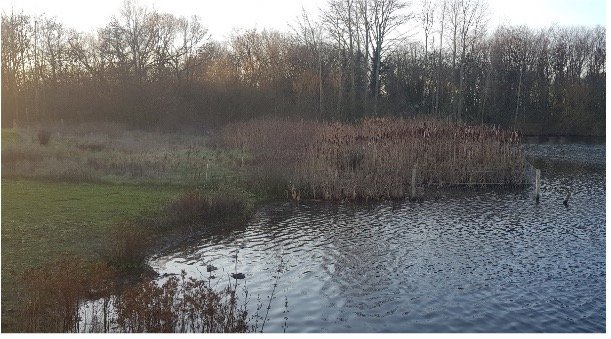
Located beside the River Trent, the 113-acre Willington Wetlands site provides an ideal setting for the project, with wet grassland, open pools and reedbeds creating valuable habitat for wildlife.
The Challenge
White storks were once widespread across Derbyshire and the wider Midlands but disappeared from the region around the 14th century, primarily as a result of habitat loss and hunting.
Although sightings of white storks have increased in recent years, including birds recorded at Willington Wetlands in 2024 and nearby in 2025, none had yet remained in the area to breed.
Derbyshire Wildlife Trust’s ambition is to restore white storks as a breeding species in the Midlands, building on the significant habitat restoration taking place across Willington Wetlands.
A key requirement of the recovery project was therefore to create a secure environment where the birds could settle, develop naturally and, ultimately, support the establishment of a wild breeding population.
The enclosure needed to provide protection from predators while offering the right conditions for the birds to thrive. It also needed to form part of a wider conservation landscape capable of supporting the species beyond the enclosure itself.
The Solution
EMEC’s Land Management team was heavily involved in the delivery of the purpose-built white stork enclosure at Willington Wetlands.
Working in consultation with Celtic Rewilding, specialists in captive breeding based in neighbouring Staffordshire, and nature recovery specialists at Derbyshire Wildlife Trust, the team helped create a robust, predator-proof enclosure within a low-disturbance conservation area.
The enclosure has been specifically designed to support the different stages of the species recovery programme, including:
- Providing a safe environment for the storks to settle and develop.
- Supporting future breeding activity and chick development.
- Enabling carefully managed soft releases into the surrounding landscape.
- Protecting the birds from potential predators.
- Creating a facility that can potentially support future species recovery projects.
Importantly, the enclosure sits within a wider rewilding landscape that is already creating increasingly valuable habitat for white storks. Natural processes, including beaver activity, are helping to create wet grassland, open pools and reedbeds, providing feeding and nesting opportunities for the species.
The project is also being delivered with a strong community focus, with volunteers supporting habitat restoration and a digital platform enabling people to share wildlife sightings, photographs and videos.
The Outcome
The arrival of three white storks marks a historic moment for nature recovery in the Midlands and the beginning of Derbyshire Wildlife Trust’s an ambitious journey to establish a breeding population at Willington Wetlands.
EMEC’s Land Management team has helped deliver the specialist infrastructure needed to support this next stage of the project, creating a secure environment to support the birds’ development. They will act as a ‘magnet flock’, encouraging wild storks migrating through the Trent Valley to stop, settle and, ultimately, breed.
The long-term ambition is for Willington Wetlands to become a critical stepping stone in the return of white storks to the Midlands, encouraging wild birds moving through the Trent Valley to settle and breed.
Beyond the return of a species lost from the region for centuries, the project demonstrates how carefully managed land, rewilding and habitat creation can work together to support species recovery and enhance biodiversity.
For EMEC, being involved in the project highlights the important role that practical land management can play in turning ambitious conservation goals into reality – helping create the conditions for wildlife to return, thrive and become part of the landscape once again.
Location – Willington Wetlands
Client Name – Derbyshire Wildlife Trust
Date – August 2026